
Lemosho Route

A long, quiet approach from the west, often called the prettiest route.

Starts at Londorossi Gate in the west, crosses the Shira Plateau and joins the southern circuit. Seven to eight days, sleeping in tents.

Overview

The Lemosho route starts at Londorossi Gate on the western side and crosses the Shira Plateau before joining the Machame route towards Barranco. It gives more days to adapt to altitude than the shorter routes.

The first days are quiet, with a good chance to see wildlife in the forest.

Highlights

  • Remote western approach
  • Shira Plateau views
  • More time for acclimatisation

Who it suits

Climbers who want scenery, space and a good chance of reaching the top.

Starting in the west

The drive to Londorossi Gate on the western side of the mountain takes several hours, and the trail starts in remote rainforest where colobus monkeys are often seen. The first nights are among the quietest on the mountain. Starting on the western side means the first days are often quiet, with only a few other groups on the trail. The forest is rich with birds, and you may see colobus or blue monkeys in the trees, which makes the start of the climb particularly memorable.

The route then climbs onto the Shira Plateau, a high, open caldera with views of Kibo ahead. Walking across the plateau is gentle and gives you time to adjust before the higher sections. The plateau is one of the most beautiful parts of Kilimanjaro, with wide views of the mountain, the moorland vegetation and, on clear days, Mount Meru to the west. Camps here are spacious and peaceful, and the sunsets are often spectacular.

Joining the southern circuit

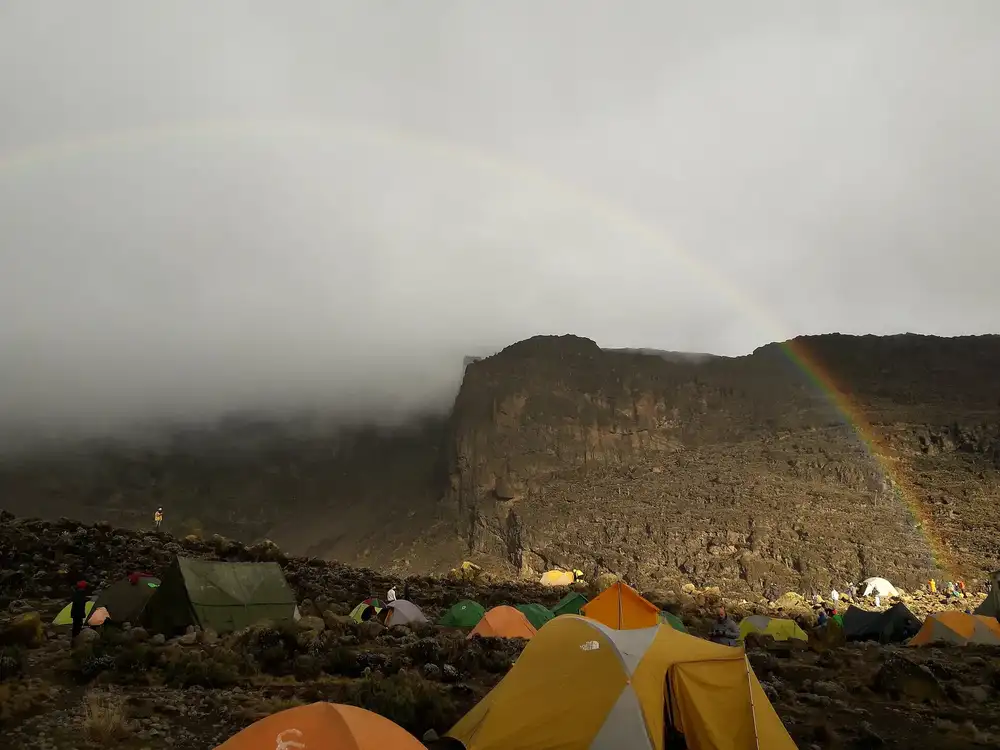
Beyond Shira, Lemosho follows the same path as Machame to the Lava Tower, the Barranco Valley and the Barranco Wall. From here the route traverses below the southern glaciers to Karanga and Barafu. The Lava Tower day climbs to about 4,600 metres before dropping back to the Barranco Valley to sleep, which helps the body adapt. The Barranco Wall then follows the next morning, with a rewarding view from the top.

Because you arrive at the busier section after several days on the mountain, you are already well acclimatised, which makes these days easier. Lemosho's longer approach also makes it one of the routes with the best summit success, especially when combined with an extra night at Karanga. Your guides watch the group closely throughout and adjust the pace as needed.

Who it suits

Lemosho is a good choice for climbers who want variety and quiet, and who can take an eight-day trip including the journey in and out. It is one of the most scenic ways to the summit. It is also well suited to photographers and anyone who wants to enjoy the scenery without rushing, with long days in beautiful landscapes and quiet camps.

The eight-day version adds an extra night on the mountain, which further improves acclimatisation. The extra night can be spent at Karanga Camp or at another camp along the route, depending on how the group is feeling. It makes summit night easier and gives you more time to enjoy the mountain.

Plan this climb

7 Day Kilimanjaro Climbing, Lemosho Route

Read our Kilimanjaro preparation guide

More details

This is an unspoilt, remote, less-used, and beautiful way up to the Shira Plateau. Trekkers sometimes use it to ascend the Western Breach route or follow it with the Kibo South Circuit to ascend by the easier Barafu Route. The first day of the route hardly ever has any game animals, and armed rangers never accompany a group.

Like the Shira route, the Lemosho route approaches Kilimanjaro from the west and then joins the Machame route. Hence everything that has been said about the Machame climb route also applies to the Lemosho route. We travel through forest and moorland from the west, crossing the caldera of Shira volcano and exploring the rock formations of the plateau.

The first two days on the Lemosho route take you through beautiful and very remote rainforest, with good chances of seeing wildlife. The start of the trail is also known as the Lemosho Glades.

Lemosho is usually a longer trek, The standard route takes seven or eight days on the mountain, and is sometimes extended to 9 days with a stay at Karanga Valley, and there are many variations of it. Which one you take depends on the operator. (A really good operator will also time their departure and stagger their camps in a way that avoids the heaviest traffic on the Machame trail.)

The length, the remoteness and the added transport cost make Lemosho a rather expensive option.

However, the longer itinerary and the fact that there are no budget operators (you can’t do this route on a budget) lead to excellent success rates on this route and it has become quite a popular one.

It is a route for people who are confident in their ability to hike in difficult terrain and camp out for extended periods, who want a superb wilderness experience and for whom cost is not the main consideration.