



Maasai Experience
Visit a Maasai community and learn about life with livestock and wildlife.
Visit a Maasai community in northern Tanzania, learn about their traditions, beadwork and life alongside wildlife.
Overview
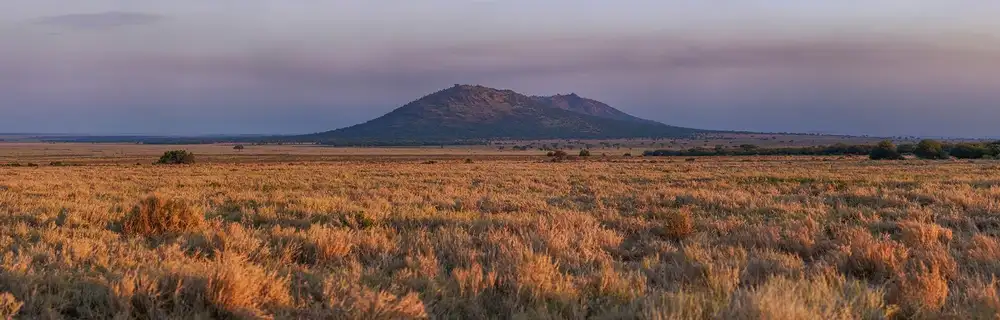
The Maasai are semi-nomadic herders who live alongside wildlife in the Ngorongoro highlands and the plains around the northern parks. A visit gives you a chance to learn about their traditions, homes, songs and dances, and their beadwork.
Some itineraries include a wilderness walk with a Maasai guide in the Crater Highlands, or a visit to a village near Arusha. We choose communities carefully and keep groups small so the visit is respectful for everyone.
A visit can be added to most northern circuit safaris. Please ask your consultant.
Highlights
- Village visit with a local guide
- Songs, dances and beadwork
- Walk with a Maasai guide in the Crater Highlands

Life in a Maasai community
Maasai families traditionally live in an enkang, a group of homes surrounded by a thorn-bush fence that protects the cattle at night. The houses are built by the women from wood, grass, mud and cow dung. Inside, the houses are small and dark, with a fireplace in the centre and separate sleeping areas for adults and children. Families often keep young animals inside at night to protect them. The design keeps the house cool in the heat of the day and warm on cold highland nights.
Cattle are at the heart of Maasai life: they provide milk and meat, and they are a measure of wealth and status. Today many Maasai combine herding with farming, schooling and work in towns and in tourism. Education, health care and water supply are important issues for many communities, and income from responsible tourism helps support schools and local projects. During a visit you may hear how young people balance traditional life with new opportunities and the challenges of a changing climate.
Dress, beadwork and dance
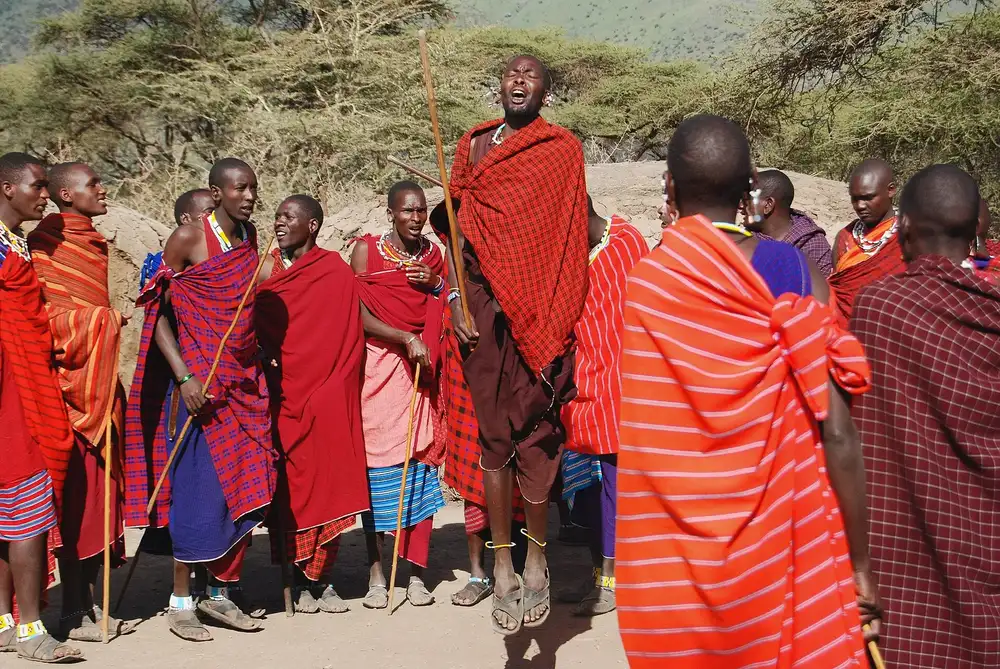
The red shuka, a cloth wrapped around the body, is the best-known part of Maasai dress, often worn with colourful beaded jewellery. The colours and patterns of the beads carry meaning, for example about age and marital status. Beadwork is mostly made by women, and it is often possible to buy pieces directly from the makers. Prices are usually fixed or modest, and buying here supports the families you meet. Your guide can explain the meaning of different colours and patterns.
Visitors are often welcomed with songs, and young men may perform the adumu, the jumping dance in which they leap high in turn. It is a celebration rather than a performance staged for tourists, and you may be invited to join in. Songs and dances mark important moments in Maasai life, from the passage of young men into warrior age to weddings and community gatherings. Joining in, even awkwardly, is usually welcomed with laughter and applause, and it is a memorable way to connect with your hosts.

The Maasai and wildlife
In the Ngorongoro Conservation Area, Maasai herders and their cattle share the land with wildlife, a rare arrangement in a protected area. Their knowledge of animals, plants and the landscape is deep. Living alongside wildlife has challenges, such as protecting cattle from lions and leopards and sharing water and grazing with wild animals. Conservation projects in the region work with Maasai communities to reduce conflict and share the benefits of tourism.
A walk with a Maasai guide is a chance to learn how plants are used for medicine and food, and how herders read tracks and the behaviour of animals. Walking with a Maasai guide also offers a different perspective on the landscape. Without the vehicle, you notice smaller things, such as insects, flowers and animal tracks, and you hear stories that connect the land with the people who have lived on it for generations.
Tell us about your trip
Share your dates, interests and budget, and we will reply with a plan built around you.
Plan your safari